Start with safety, not cleanup
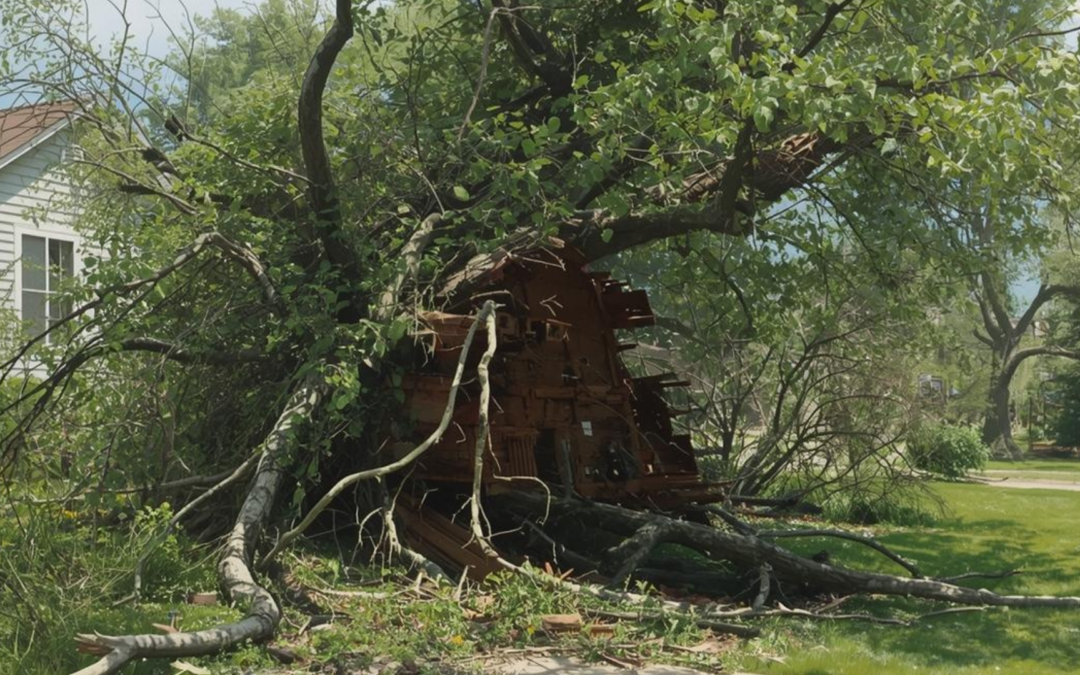
When a tree comes down, the first minutes matter more than the next day’s cleanup. If the tree hit your roof, vehicle, fence, or garage, treat the area like a hazard zone. Keep everyone back and watch for shifting limbs under tension, hanging branches, and cracked trunks that can roll. If any part of the tree is touching a power line or leaning into one, step away and call 911 or your utility immediately. That is not a DIY situation, and it is not an “I’ll just drag it a few feet” situation.
Once the immediate area is secure, take a breath and assess from a distance. In Overland Park, strong storms can snap limbs or uproot whole trees with saturated soil and gusts that hit harder than you expect. When homeowners search “emergency tree removal near me,” it is usually because they need two things at once: fast hazard reduction and a plan that avoids making the damage worse. That is exactly what our emergency tree service is built for.
Document the damage the right way for insurance
Before anything is cut, take clear photos and video from multiple angles. Capture the tree’s full position, the point of impact, and any visible splitting, root lift, or limb failure. Then take closer shots of damaged gutters, broken windows, crushed fencing, dented vehicles, and interior leaks if they are visible. If you can do it safely, photograph the base of the tree and surrounding soil so the cause of failure is easier to explain later.
If the tree hit a structure, most policies expect you to prevent further damage. That can mean tarping a roof opening or moving valuables away from a leak path, but do not start cutting the tree off a roof without professional help. A trunk resting on a roof can be “holding” weight in a way that changes suddenly when cut. When we respond to emergency tree services in Overland Park, we prioritize controlled removal so the structure is protected while the hazard is reduced.
Know when it’s truly an emergency tree removal
Not every downed limb needs a midnight response, but several scenarios do:
The tree is on a roof, through a structure, or blocking an exit
A limb is hanging over a driveway, walkway, or front entry
The tree is split and partially standing (a high-risk “widowmaker” situation)
The trunk is leaning toward the home with cracked soil or lifted roots
The tree is tangled with lines, fences, or nearby trees creating unstable tension
We provide emergency tree services for storm-damaged, fallen, or hazardous trees, with a rapid-response approach focused on safety and property protection.
What happens during an emergency tree service call
Homeowners often ask what they should expect when they call an emergency tree cutting service in Overland Park, KS. Our process is designed to be straightforward, even when the situation is stressful.
First, we evaluate risk: where the weight is, what could shift, and what is protecting the structure versus what is threatening it. Then we plan the cuts and rigging so limbs are lowered in a controlled way rather than dropped. In tight Overland Park neighborhoods, that matters. Next, we remove hazard sections first: hanging limbs, split leaders, and anything actively threatening the home or driveway. After the immediate hazard is under control, we move into full removal or a staged removal depending on access and site conditions.
We specialize in the reconstruction and maintenance of storm-damaged trees, including removal, pruning, trimming, and stump grinding. That means if the tree is not a total loss, we can advise on what can be saved and stabilized versus what must be removed for safety.
Dangerous trees don’t always fall right away
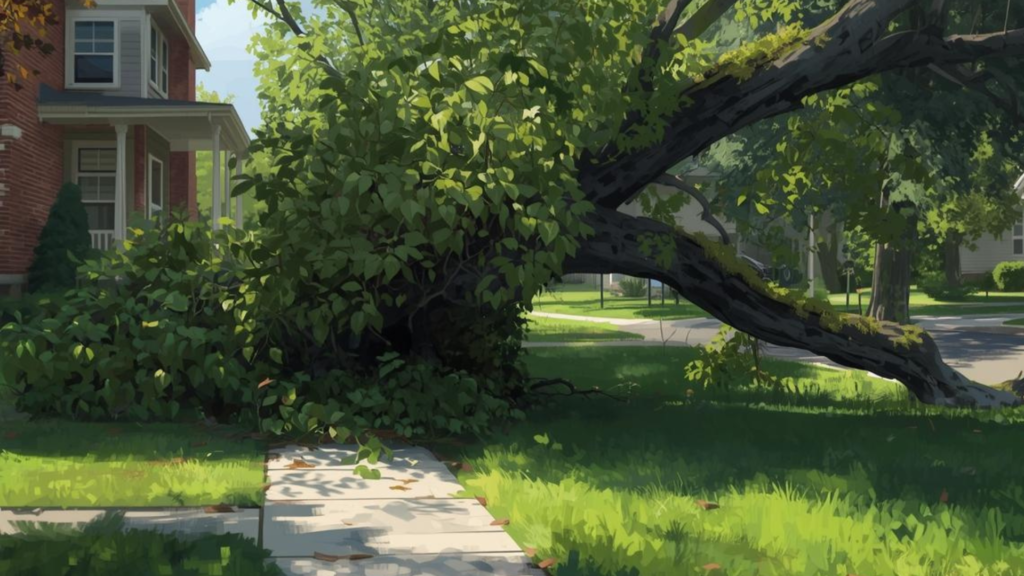
Some of the most dangerous trees in Overland Park are still standing. They look “mostly fine,” but the trunk has internal cracking, the root plate has shifted, or a main union split during wind. Warning signs include:
- Fresh vertical cracks in the trunk or at a major branch junction
- Bark peeling off in a strip with exposed wood underneath
- Soil heaving or a visible mound on one side of the base
- New lean that wasn’t there before
- Large limbs that suddenly droop or hang lower than normal
If you are in Overland Park or nearby areas like Prairie Village or Leawood and you suspect a dangerous tree, treat it the same way you would treat a structural hazard: keep distance, limit access, and call a professional. Our team is licensed and insured for tree removal and hazard work, so you can move forward with confidence when the situation is serious.
Overland Park storms create specific tree risks
Local conditions matter. In the Kansas City metro, fast-moving storms and saturated ground can combine to cause uprooting. Add mature canopies that have not been properly thinned, and you get extra wind load on the trunk and roots. That is why emergency response is only one part of the bigger picture.
We see repeat patterns: heavy limbs over garages, codominant stems that split at the union, and trees that were already stressed by pests or drought. Once the immediate danger is handled, it is smart to schedule a broader inspection so the next storm does not turn into another emergency.
If you have ever walked around Oak Park Mall after a storm and noticed debris crews working the perimeter, you already understand the point: even well-managed areas take storm cleanup seriously. The same mindset should apply to residential properties.
Cleanup and debris removal without creating new hazards
After emergency removal, you still need the site handled correctly. Dragging limbs across grass can tear up irrigation lines. Rolling rounds downhill can damage fencing. And leaving heavy debris stacked near the curb can create visibility hazards for drivers.
We approach cleanup as part of hazard reduction. Debris is staged safely, hauled, or chipped based on access and your preferences. If a stump remains, we can coordinate stump grinding so you are not left with a tripping hazard or an obstacle to future landscaping. Our service offerings include stump grinding as part of complete storm recovery.
When a damaged tree can be saved instead of removed
Not every storm-damaged tree needs to come down. Sometimes the tree needs corrective pruning, reduction cuts to rebalance the canopy, or removal of broken limbs to prevent decay from spreading. In other cases, the tree is structurally compromised and removal is the safest long-term choice.
If you are unsure, the safest next step is a professional assessment. Our goal is to help you make the right call for safety first, while still protecting the value trees add to your property.
How to reduce the chance of another emergency
Once you have lived through a fallen tree situation, prevention stops being abstract. The most effective steps usually include:
- Structural pruning to reduce wind resistance and remove weak attachments
- Removing deadwood before it becomes a projectile
- Monitoring trees with pest or disease pressure
- Improving root-zone health so trees anchor better in storms
Our team provides tree maintenance services including health assessments, pruning, pest management, and soil care to strengthen trees and prevent disease. When you combine maintenance with smart risk planning, you dramatically lower the odds of searching “emergency tree removal near me” again after the next big storm.
One way to think about it is the same way facility teams think about high-traffic properties like the Museum at Prairie fire: proactive inspection beats reactive repairs. Your home deserves that same level of attention.
FAQs
Q: What should I do if a tree is leaning toward my house but hasn’t fallen?
A: Keep people away from the area, avoid parking under it, and schedule an urgent assessment. A new lean with lifted roots or cracks can fail without warning.
Q: Can I cut a tree off my roof myself if it’s “just a few limbs”?
A: It is not recommended. Roof-loaded limbs can shift when cut, turning a manageable situation into major structural damage or injury risk.
Q: What if a fallen tree is blocking my driveway in Overland Park?
A: Treat it as a hazard if limbs are under tension or near lines. Controlled cutting and removal prevents kickback, rolling logs, and secondary property damage.
Q: How do I know if a storm-damaged tree is a removal candidate?
A: Signs include trunk splitting, major root lift, large canopy loss, or damage near the base. A professional evaluation confirms whether the structure is still stable.
Q: Should I keep pets and kids inside during emergency tree removal?
A: Yes. Equipment, falling debris, and noise create unpredictable conditions. Keeping everyone inside protects safety and keeps the work area clear.