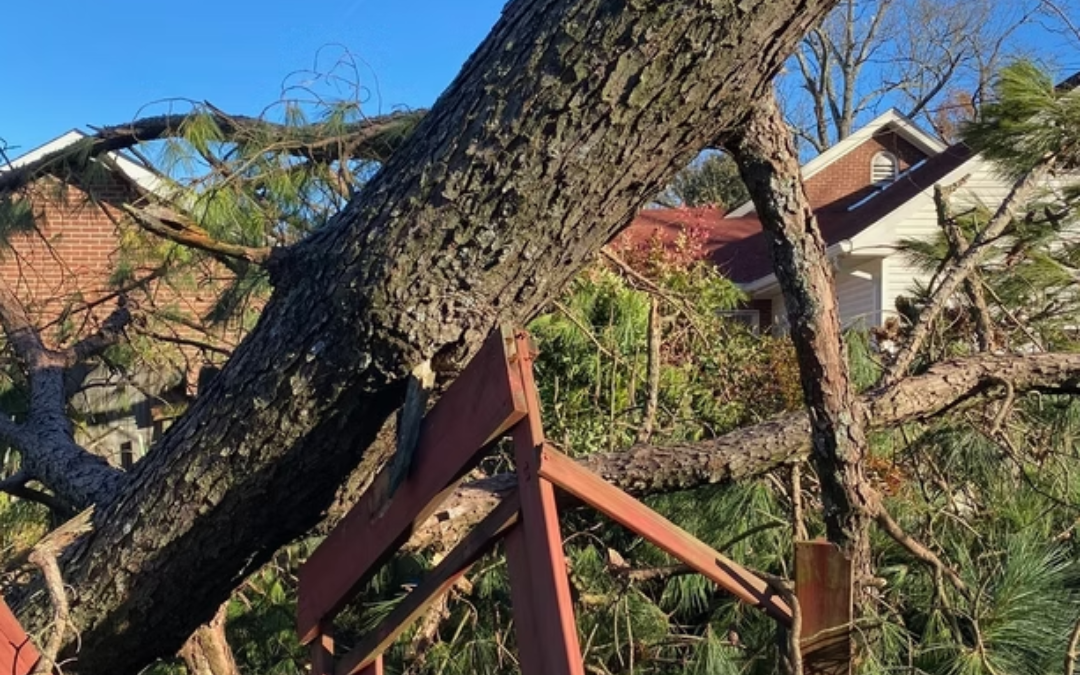
Storm season in Lee’s Summit can arrive quickly and without much warning. High winds, heavy rains, and saturated soils are a dangerous combination when it comes to trees in your yard. While not every tree will fall during a storm, many give off warning signs long before disaster strikes. Recognizing these signs early can protect your home, your family, and your property. At Masters Tree Care Experts, we specialize in assessing tree risk and preventing storm-related damage. Here’s what to look for before the next big storm rolls through.
Table of Contents
1. Leaning Trees or Shifting Roots
One of the most obvious signs a tree may fall is if it’s already leaning. While some trees naturally grow at a slight angle, a sudden lean or a tree that’s leaning more over time is a red flag.
Causes of a leaning tree include:
- Soil erosion or oversaturation weakening root grip
- Root rot or damage underground
- High winds that push a tree past its center of gravity
Look at the base of the tree. If the soil looks cracked or raised on one side, the tree may be shifting and at risk of falling during a storm.
2. Cracks in the Trunk or Major Limbs
Cracks or splits in a tree’s trunk or large branches indicate structural weakness. When storms hit, these compromised areas are more likely to break apart or collapse.
What to check for:
- Vertical cracks running up the trunk
- Bark peeling or falling off
- Deep splits in major limbs
Even if the tree appears healthy from a distance, internal damage can make it unsafe. These signs call for immediate inspection by a certified arborist.
3. Dead or Decaying Branches
Dead wood doesn’t bend—it breaks. And during high winds, these brittle branches can become hazardous projectiles or weaken the balance of the tree as a whole.
Here’s how to spot trouble:
- Branches without leaves during the growing season
- Wood that appears hollow, dry, or crumbles easily
- Large limbs with fungal growth, like mushrooms, near the base
A tree filled with deadwood is more vulnerable to breaking under pressure. Regular pruning and deadwooding can prevent this from becoming a storm risk.
4. Fungal Growth and Root Issues
Healthy roots are critical for tree stability. If your tree is showing signs of decay near the base or fungal growth around the root zone, it may be suffering from internal rot.
Signs your tree may have root damage:
- Mushrooms or fungus growing around the base
- Soft or spongy wood near the root flare
- Sudden thinning of the canopy or leaf discoloration
Trees with root rot can fall without much warning, especially when soil becomes saturated during spring or summer storms.
5. Close Proximity to Structures or Power Lines
Trees don’t have to fall to cause damage. Large limbs hanging over your roof, fence, or driveway can break off and cause serious harm. Similarly, trees growing near power lines pose both a safety hazard and a fire risk.
Watch for:
- Trees that extend over your house or garage
- Branches tangled in utility lines
- Tall trees growing close to your home’s foundation
In high winds, even healthy branches can snap. Strategic trimming or full removal may be necessary to eliminate the risk.
When to Call Masters Tree Care Experts
If you notice any of these warning signs, it’s best not to wait until after a storm to take action. At Masters Tree Care Experts, we offer professional tree risk assessments and emergency removal services across Lee’s Summit. Our certified arborists have over 20 years of experience identifying problem trees and removing them safely before they fall.
Call us immediately if:
- A tree is leaning more than usual after a storm
- You notice large cracks or hanging limbs
- You see fungal growth or root issues at the base
- You’re unsure whether your trees are structurally sound
Stay Safe with Proactive Tree Care
Avoiding storm damage starts with regular tree maintenance and early detection. We recommend annual tree health inspections, especially before storm season. Removing deadwood, addressing root issues, and making strategic pruning cuts are all part of a long-term plan to keep your landscape strong and safe.
Protect your home and loved ones with expert help from Masters Tree Care Experts. Schedule your tree risk assessment today by calling (913) 909-9768 or visiting www.masterstreecareexperts.com.
Stay safe, Lee’s Summit—and trust your trees to the Masters.